
Amanita Muscaria
The Red-Spotted Prophet of the Forest
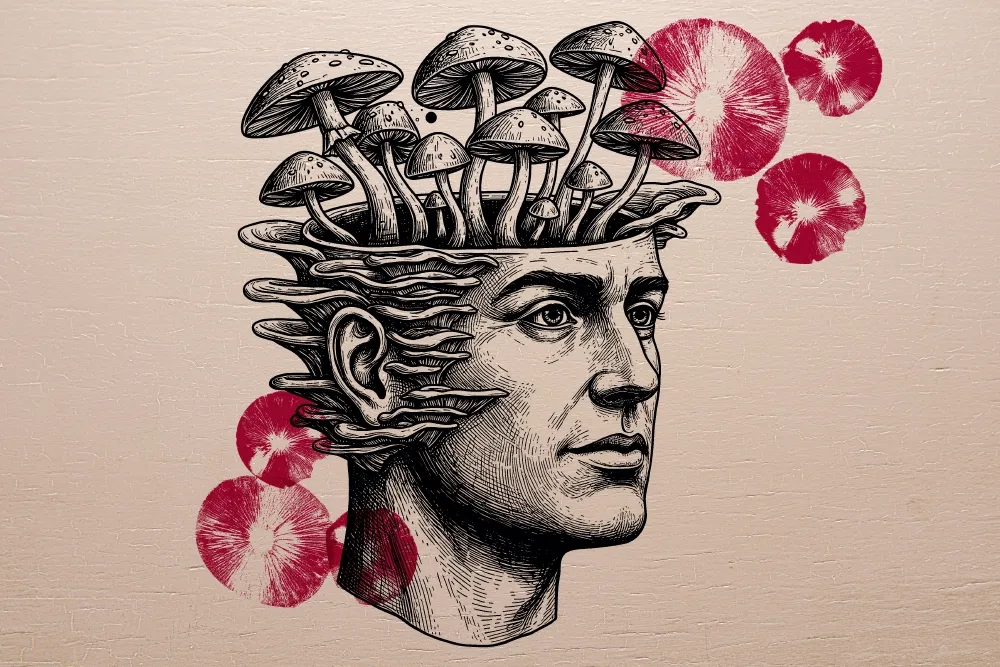
There’s a moment in the forest, just after rain, when the earthy smell of moss and decomposing leaves floats like incense. Tiny beads of dew cling to mushrooms—but one stands out: a fire-engine-red cap flecked with white, as if stardust settled there overnight.
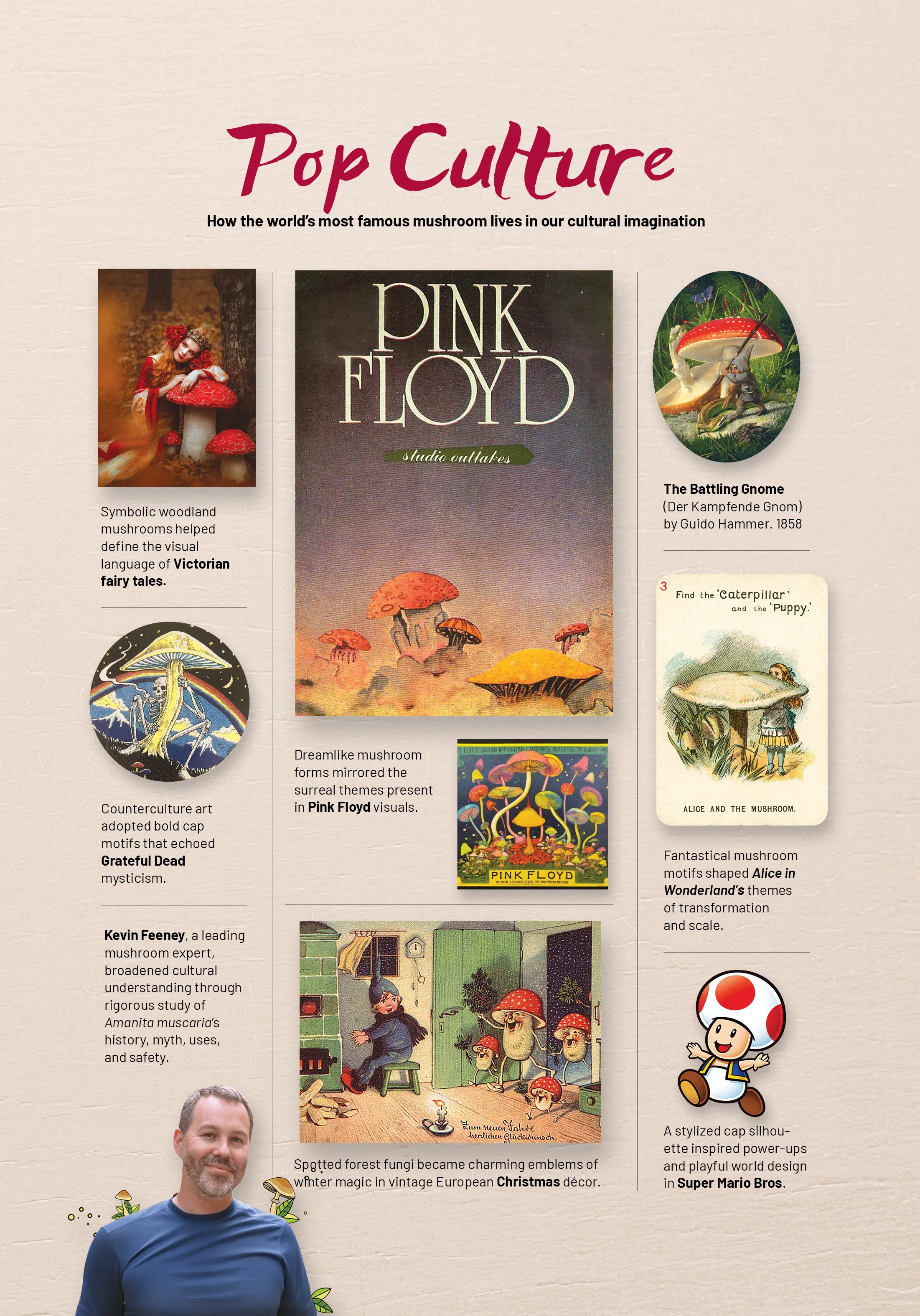
This iconic mushroom—Amanita muscaria, the fly agaric—has captured human imagination across continents and centuries. It’s the fairy-tale mushroom, the one featured in storybooks and folklore, yet also one of the most misunderstood fungi on the planet.
Unlike most fungi that grow in narrow niches, A. muscaria is a world traveler. It thrives across the Northern Hemisphere, from Siberian tundra to European deciduous woods, forming intimate partnerships with birch, pine, spruce, and oak trees. It has even colonized parts of the Southern Hemisphere, hitchhiking with humans and their forests.
But while it’s widespread—and wildly eye-catching—it remains endlessly mysterious. Its red-and-white form is more than decoration; it’s a beacon calling to storytellers, scientists, mystics, and foragers alike.
A FORAGER’S QUEST
Besides its iconic look, what adds to the magical lore of Amanita muscaria is that it can’t realistically be cultivated. The mushroom depends on a strict mycorrhizal relationship with specific trees like birch, pine, and spruce. Instead of growing on simple substrates like farmed mushrooms, it survives by forming a complex underground network with its host trees, exchanging water and nutrients in ways that are difficult to replicate—and still not fully understood. Its lifecycle also unfolds slowly and produces fruiting bodies only when climate, soil, and seasonal conditions align. Because these ecological relationships can’t be recreated in commercial or home-growing environments, A. muscaria can only be gathered where it naturally thrives in the wild.
Erik Casano—Chief Networking Officer for Amentara, a wellness and ethnobotanical company that provides education for A. muscaria and provides advocacy about their traditional and mindful use—embarked on a pilgrimage of his own. Deep on Sweden’s enchanted island of Orust, where forests slip into mist and ancient boulders whisper timeworn secrets, he set out to forage for these fungi. The air was cold and damp; the forest, a living cathedral.
“Hunting for the iconic red-capped mushroom was like going on a spiritual quest,” Casano says. “I’d wander, asking unseen spirits to guide me to the mushrooms. Every time I found one I’d say, ‘Hello little friend, would you like to come home with me?’ And they always said yes.”
To him, it wasn’t just a mushroom. It was communion—an invitation rooted in ancient tradition.
SIBERIAN SHAMANISM ROOTS
In Eastern Siberia and among Indigenous Arctic tribes, A. muscaria was revered and carried ritual importance. Shamans consumed it to enter trance states, commune with spirits, and access other realms of consciousness. Whole societies understood it as a bridge to the mystical—a key to altered states rooted not in escapism, but in insight and connection. In some regions, people even ingested the urine of a shaman who had eaten the mushroom, a practice said to refine its active compounds while avoiding unwanted effects. In places where the mushroom was scarce, it became so valued that it functioned as a kind of currency.
The myths run deep: a Kamchatka shaman reportedly felt empowered to “outwork three men” after consuming A. muscaria. A Chukchi high priestess wrote that it seemed to accelerate even mundane tasks like tanning reindeer hides.
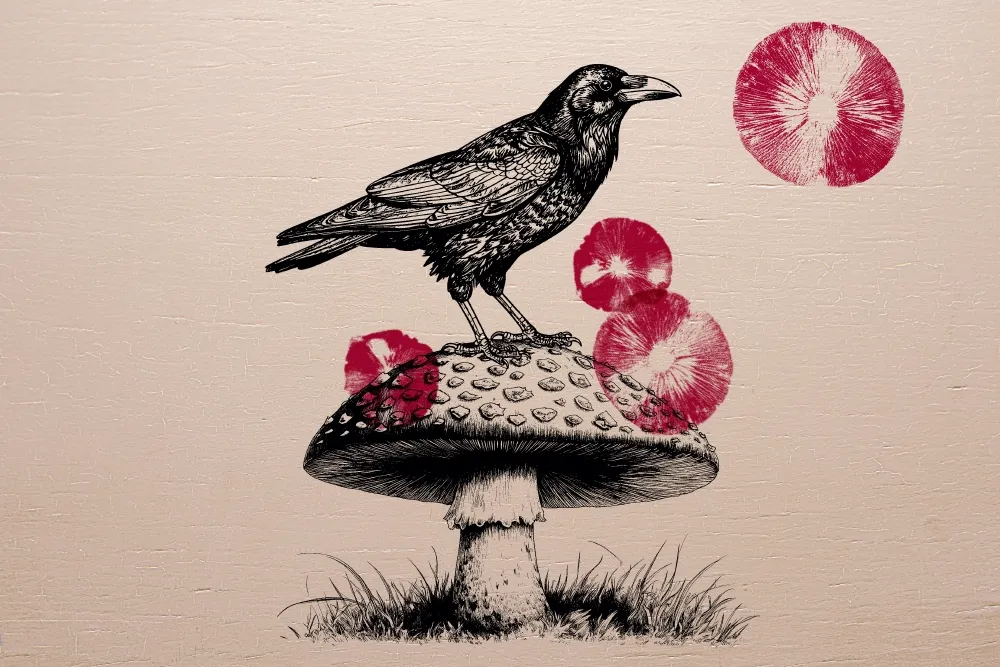
And then there’s Big Raven—a mythic figure who, according to lore, consumed the mushroom and gained the strength to hurl a beached whale back into the sea. To these communities, A. muscaria was a divine offering, a gift from forces unseen.
Across the Atlantic, Celtic Druids also treasured the fungus, finding it in sacred groves at the base of oak trees, and used it in meditative practices meant to access deeper states of awareness.
Whole societies understood it as a bridge to the mystical—a key to altered states rooted not in escapism, but in insight and connection.
A SECOND COMING
For most of modern history, however, the mushroom lingered in the shadows of fear and misinformation. In Sweden—as in many places—children were taught to fear the red-spotted toadstool, mistakenly lumping it together with deadly species. Folklore and cautionary tales painted it as poisonous and dangerous, obscuring its true nature for generations.
There are toxic Amanita species—such as the Death Caps and Destroying Angels—but these species are typically all white and can more closely resemble edible mushrooms, which is why misidentification is so dangerous. A. muscaria itself also has regional color variants (red, orange, and yellow forms such as var. flavivolvata, var. guessii, and var. formosa). These are still considered A. muscaria, and they should all be assumed potentially toxic.
Casano reflects that “Amanita muscaria has its own dance. It’s about preparation and respect.” The mushrooms contain psychoactive compounds—muscimol and ibotenic acid—which can alter perception if not prepared properly. Safe use depends on accurate identification, careful sourcing, conservative preparation, and a clear understanding of its chemical properties.
As with all mushroom foraging and consumption, safety is not intuitive—it is a learned and ongoing practice shaped by education, experience, and strict attention to detail. Even small mistakes can carry serious risk, so this should only be approached slowly, cautiously, and with full awareness of potential consequences. When in doubt, do not consume, especially without expert guidance.
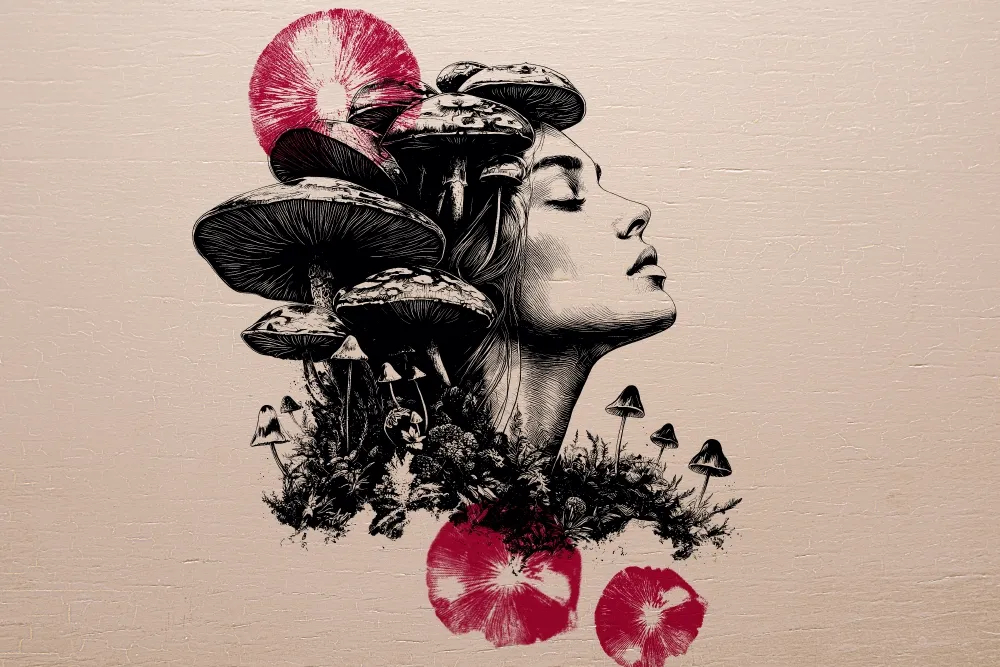
HEALING AND MODERN CURIOSITY
In the 21st century, A. muscaria has emerged again—not as a feared forest dweller, but as a subject of curiosity, reverence, and research. Christian Rasmussen, founder of Amentara, credits the mushroom with helping him through a grueling withdrawal from benzodiazepines. Casano himself—after a cancer diagnosis—found in A. muscaria a source of deep sleep, emotional resilience, and renewed motivation. Today he consumes a daily dose and speaks of feeling aligned, in a “flow state” that ripples through his waking life.
And science—slowly, carefully—is paying attention. Preliminary research suggests A. muscaria’s compounds may help with anxiety, sleep disorders, pain, inflammation, and neurological conditions. Kevin Feeney, cultural anthropologist, mushroom expert, and lawyer, emphasizes careful preparation to reduce unwanted effects while highlighting the mushroom’s analgesic, anti-inflammatory, and anxiolytic potential.
Still, more research lies ahead—and both scientists and foragers urge respectful curiosity rather than reckless use.
It’s the red-spotted hero of children’s fantasy art.
A MUSHROOM THAT TEACHES US TO WANDER
Today, the mushroom sits at a crossroads between ancient tradition and modern curiosity.
It’s the red-spotted hero of children’s fantasy art, a botanical ambassador of deep woods and faerie lore. It’s the subject of growing scientific inquiry and personal testimonies of healing and reflection. And for people like Casano, it is a companion—one that greets you in silence and invites you to listen to the whispers of the forest.
Perhaps Amanita muscaria is more than a mushroom. Perhaps it is a reminder that nature—when approached with reverence—still has lessons to teach the weary and the wandering.