
Moses Baca
The First Pot P.O.W.
Written By: DOUGLAS JAMES
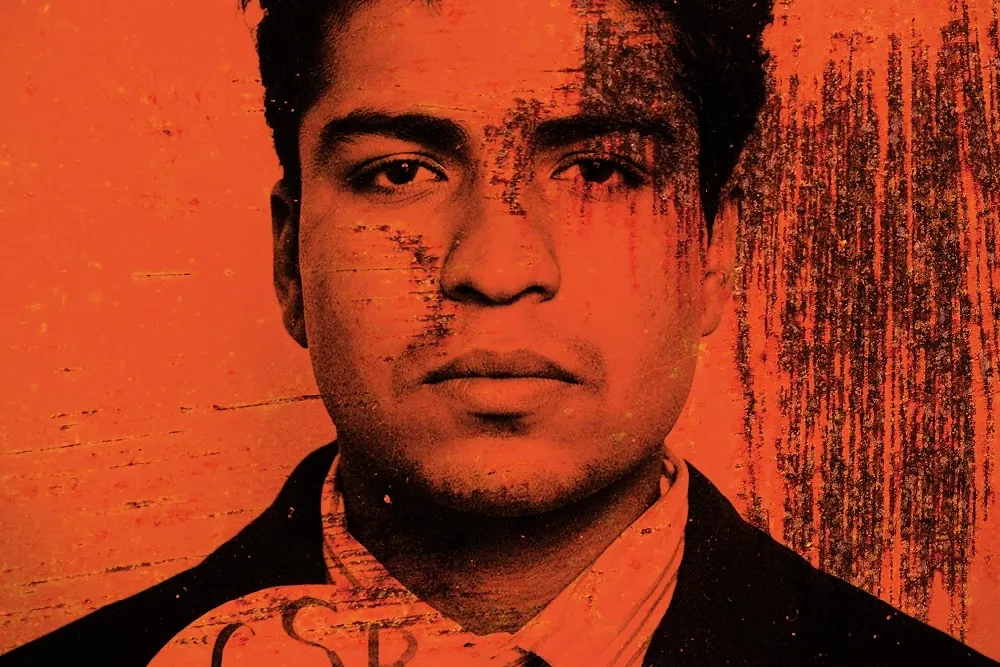
October 3, 1937: On a brisk Sunday morning in Colorado, just after 3am, police arrived on California Street in the Five Points neighborhood outside Denver on a drunk-and-disorderly call. The cops busted down the door of a third-floor Victorian rooming house apartment and arrested Moses Baca, a 23-year-old Mexican American, on a “Drunk & Disturbance” charge. As they searched Baca’s apartment, they found a quarter ounce of “Devil’s weed” in his desk drawer—and charged him with possession of “marijuana.”
On this historic morning, Baca had the dubious honor of being the first person arrested under the newly enacted Marihuana Tax Act of 1937.
He was sentenced to 18 months in Leavenworth Penitentiary in Kansas.
During the trial, the judge said: “I consider marijuana the worst of all narcotics, far worse than the use of morphine or cocaine. Under its influence men become beasts. Marijuana destroys life itself. I have no sympathy with those who sell this weed. The government is going to enforce this new law to the letter.”
Two days after Baca’s arrest, Denver police working with agents of the Federal Bureau of Narcotics (FBN) raided the Lexington Hotel and arrested Samuel R. Caldwell, 58, an unemployed laborer, for possession of two “marijuana cigarettes.” Authorities alleged that Caldwell had sold cannabis to Baca, though later historical research has found no clear evidence supporting that claim. Caldwell was sentenced to four years of hard labor in Leavenworth Penitentiary, plus a $1,000 fine. It’s no coincidence that these arrests came just days after the Marihuana Tax Act was enacted.
THE CANNABIS CZAR
The Marihuana Tax Act went into effect on October 1, 1937—a U.S. federal law that effectively criminalized cannabis by imposing strict taxes and regulatory requirements on its sale, possession, and distribution. Rather than banning cannabis outright, the Act made it nearly impossible to legally buy or sell by requiring costly permits, extensive paperwork, and severe penalties for noncompliance. This law marked one of the earliest and most influential steps in the federal government’s long-term regulation—and stigmatization—of the plant.
The law was written by Harry Anslinger, a voracious anti-cannabis prohibitionist and head of the Federal Bureau of Narcotics. Looking every inch the mafia kingpin, the bald, bulldog-faced Anslinger had cut his teeth enforcing alcohol prohibition. But when that era ended, he needed a new crusade. Out of pure institutional survival—and a need to maintain relevance—Anslinger turned his gaze toward cannabis.
Anslinger framed cannabis use as a moral and social threat, frequently linking it to immigrants, Black Americans, and jazz musicians in public statements and internal memos. In one memo, he wrote that jazz musicians “reek of filth.”
Baca’s arrest was more than a legal action—it became a symbolic marker in the federal government’s first wave of the plant’s prosecutions.
To be sure, Anslinger was the dark prince of pot propaganda. He furnished newspapers with outrageous quotes: “If the hideous monster Frankenstein came face to face with the monster marijuana, he would drop dead of fright”; “marijuana users will fall into a delirious rage and will be gripped by dreams ... of an erotic character”; “marijuana will make you lose the power of connected thought ... and drive you insane.”
Historians widely agree that racial prejudice and anti-immigrant sentiment were significant factors in the public rhetoric surrounding cannabis prohibition in the 1930s. Anslinger focused early enforcement efforts in states like Colorado, which had significant Mexican American communities.
In fact, Anslinger personally attended Baca and Caldwell’s sentencing—traveling two days by train. “These men have shown the way to other district attorneys throughout the nation,” Anslinger told the Denver Post. “Marijuana has become our greatest problem.”
MOVIE MADNESS
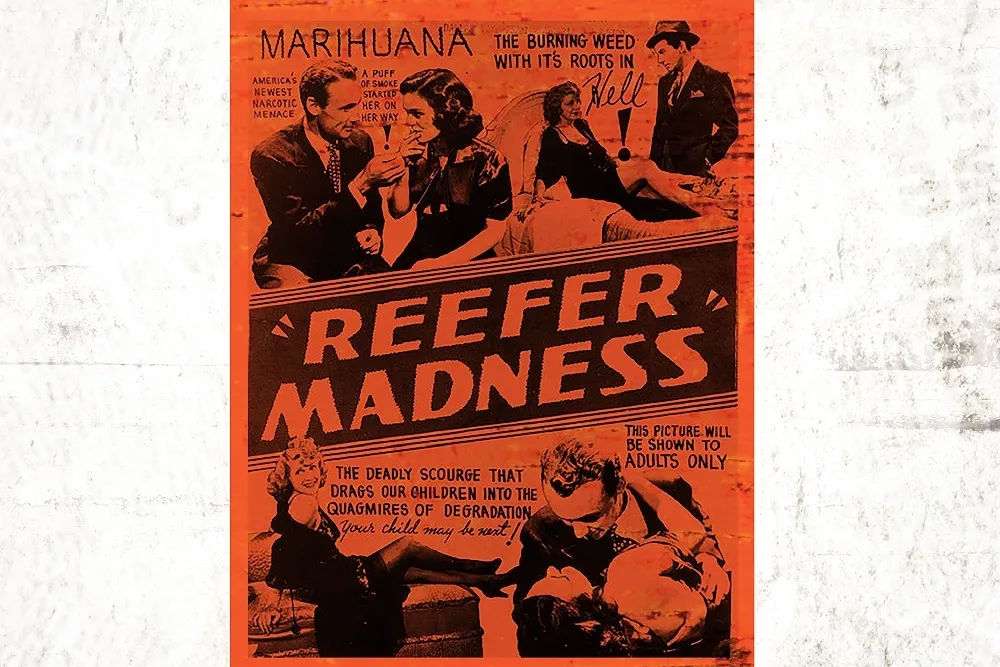
Between 1936 and 1938, a wave of anti-cannabis exploitation films hit theaters. Reefer Madness, financed by a church-affiliated group, was intended as a cautionary tale for parents about the supposed dangers of cannabis. The film premiered in 1936—prior to the passage of the Marihuana Tax Act—and was part of a broader anti-cannabis publicity campaign of the era.
More films followed, including Marihuana and Assassin of Youth (the title lifted from an article Anslinger wrote for The American Magazine).
The plot of Reefer Madness—originally titled Tell Your Children—tells the ludicrous tale of high school students whose lives spiral into violence, madness, and moral collapse after smoking cannabis. The film portrays cannabis use as leading to hallucinations, homicidal rage, and sexual deviancy. Subtle, it was not.
POT, PROLOGUE & PROPHECY
Over the years, as more information about Baca’s arrest has surfaced, it has become clearer why he may have been targeted. Baca was no stranger to law enforcement—the FBN had a file on him. In those files, he was referred to as a “wetback,” a derogatory slur aimed at Mexicans who crossed the Rio Grande into the United States.
The report also mentions Baca’s involvement in “gun play,” though no such charge appears in the police records. Through Anslinger’s proxies, the Denver Post falsely quoted Baca as saying that under cannabis’s influence he “became a wild beast.” There is no independent record confirming that Baca actually made this statement.
Baca did have prior run-ins with police—car-prowl charges and drunk-and-disorderly arrests. He was also reportedly known to drink Sterno, a toxic canned fuel containing methyl alcohol. Some historians have speculated that Sterno ingestion, which can cause severe intoxication and hallucinations, may have contributed to Baca’s behavior more than cannabis. However, this remains speculative.
Most historians agree that racism factored heavily into early cannabis enforcement. Yale historian David F. Musto wrote: “The anti-marihuana law of 1937 was largely the federal government’s response to political pressure from enforcement agencies and other alarmed groups who feared the use and spread of marihuana by ‘Mexicans.’”
One has to wonder: Was this a setup? There is no documented evidence that police planted weed in Baca’s drawer, though the question reflects longstanding skepticism about early enforcement tactics.
In the annals of cannabis history, 1937 stands as a milestone. Baca’s arrest was more than a legal action—it became a symbolic marker in the federal government’s first wave of the plant’s prosecutions.
And then comes the irony.
Colorado became one of the first U.S. states to legalize recreational cannabis in 2012 (retail sales beginning in 2014). Today, dispensaries operate in neighborhoods not far from where Baca and Caldwell were arrested.
Moses Baca was released from prison on December 10, 1938. In 1940, he moved with his family to California. He died on March 19, 1948, of a ruptured pulmonary tuberculosis abscess that caused blood poisoning. According to historical accounts of his death certificate, his race was listed as “white.”