
Cringe Lens
Movies and Sh*t
Written By: JOHNNY NAVARRO
FADE UP FROM BLACK ONTO ESTABLISHING BLACK-AND-WHITE SHOT OF NEW YORK SKYLINE:
MUSIC UP – GEORGE GERSHWIN’S “Rhapsody in Blue” FILLS THE SCENE.
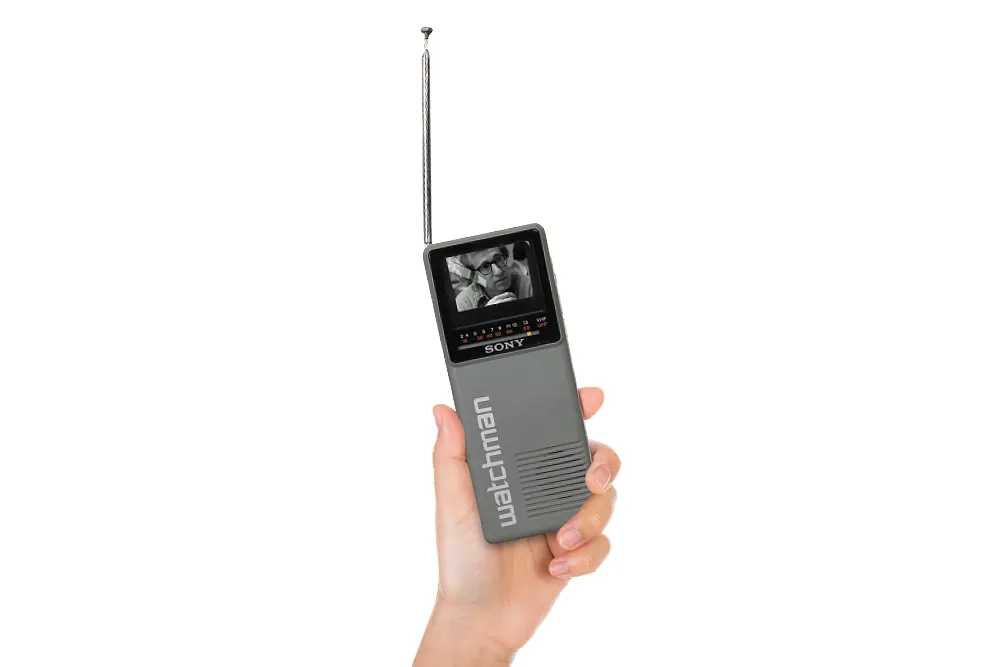
VOICE OVER (WOODY ALLEN): “Chapter one: he was as tough and romantic as the city he loved. Behind his black-rimmed glasses was the coiled sexual power of a jungle cat. New York was his town, and it always would be!”
MUSIC RISES TO A CRESCENDO.
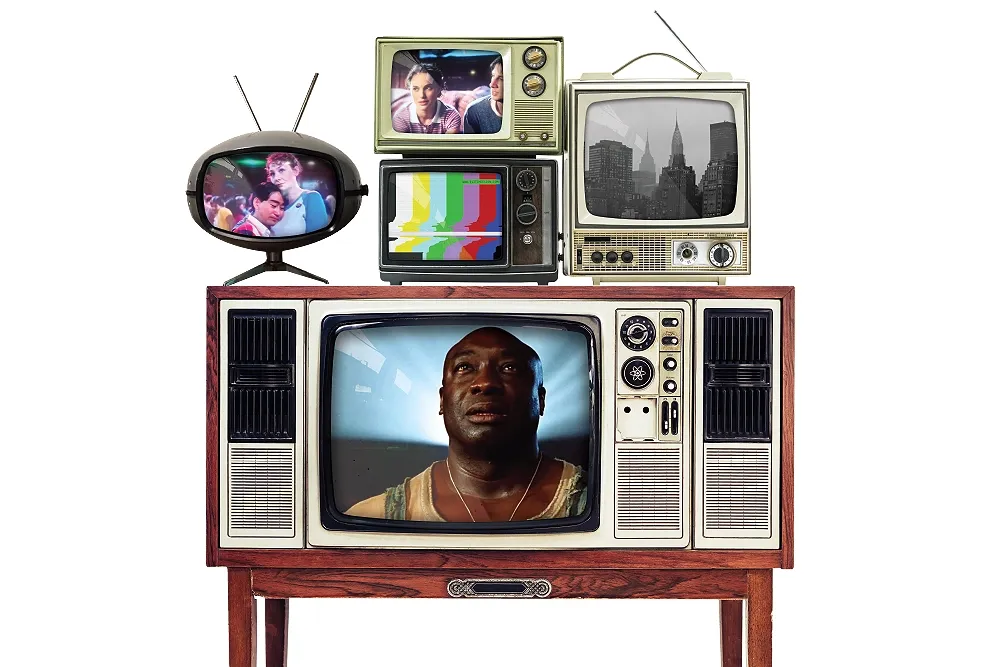
Part of what I have always loved about the weed lifestyle (since I was 14) is that it allows me to be on a slightly altered frequency. Like all the other planes are on Air Traffic Control’s “normal” channel and I am approaching on Channel “J.”
When I first experienced this opening to Woody Allen’s Manhattan (1979), I was quite certain that it was pure genius and I wasn’t alone. It received Academy Award nominations for both Mariel Hemingway (Best Supporting Actress) and for Allen (Best Original Screenplay). It also made four times its initial budget in box office receipts and was a huge hit for Woody, at that time.
Now, upon reflection, I can’t hide from the fact that the story is about a 42-year-old comedy writer who dates a 17-year-old girl but falls in love with his best friend’s mistress.
Let’s ignore all of the issues that the Wood-man has had with sexual impropriety, alleged misconduct, or that he married his significant other’s (Mia Farrow’s) adopted daughter (Soon-Yi Previn) outright. That is a topic for a different discussion—but Allen’s story content does not really stand up over repeated viewings without raising some other concerns.
A LENS ADJUSTMENT
The framework by which we interpret films in today’s modern world has been modified. Like a cinematic motion picture is modified to fit the aspect ratio of a television setting, some optics still appear clear as day, but others have been modified to fit your newly acquired sensibilities.
TROPES EVALUATED
“Trope” defined: a significant or recurrent theme; a motif. Two such tropes, which I personally believe have become road-weary in movies, are: The Magical Negro and The Manic Pixie Dream Girl.
THE MAGICAL NEGRO
John Coffey (played by Michael Clarke Duncan) walks onto the “Green Mile” in Frank Darabont’s 1999 follow up (The Green Mile) to The Shawshank Redemption and we wonder what his story could possibly be. How could such a gentle giant find himself on “The Mile,” the prison ward named as such due to its green linoleum floor; the final path to the executioner’s chair? But John Coffey is there for one sole purpose: to help the white protagonists. This is the definition of “The Magical Negro.”
The film was a massive success: it returned $268 million on a $60 million production budget. Heck, it even starred Tom Hanks. Both stories (Shawshank and Green Mile) were adapted from Stephen King novellas, and both were set behind prison walls.
John Coffey is like a sacrificial lamb. Wrongly imprisoned for a crime he did not commit, and blessed with supernatural powers as a hands-on healer, he is punished by death by electrocution for a dual homicide he did not commit—but not before performing mystical healing for the white people he encounters on his way to the chair. I mean, his initials “JC” are not a coincidence; they are as symbolic as the phrase, “Christ died on the cross for all of our sins.” But we know nothing of John Coffey’s backstory. We don’t really care either. We are just so glad he is there.
The same is true of Bagger Vance (Will Smith) in The Legend of Bagger Vance (2000). Much like JC, Will Smith appears seemingly out of nowhere, onto the golf course one day to help Rannulf Junuh, played by Matt Damon, rediscover his golf swing after losing it in a bottle of whiskey that he climbed into in a post-traumatic-stress-inspired reaction to his World War I experiences. But we know nothing of Bagger Vance. Where did he come from? What are his hopes and dreams? Is he really a figment of Damon’s imagination? It’s okay. Damon is the failing white hero, and Smith is the Magical Negro sent from on high to save him. Have a mint julep, smile, and let’s get on with the winning golf!
This movie was actually a legendary flop. Although directed by Robert Redford and with a top-notch cast that included Charlize Theron with the other two Oscar winners, it only returned $39.5 million on an $80 million production budget. And it drew some ire from the critics at that time for just this type of exploitation. I watch it now and it’s kind of obvious, but when it came out, I loved it and didn’t understand why it didn’t perform well.
I’m not saying that these concepts are the “make it” or “break it” of a film. I am simply saying that nowadays these concepts can take you out of the organic movie-watching process. They have become a distraction. And a distraction in the TikTok era is lethal.
THE MANIC PIXIE DREAM GIRL
She’s quirky, she’s energetic, she’s unconventional. She is usually hot. Consider Natalie Portman’s “Marty” in Beautiful Girls (1996) and her “Sam” in Garden State (2004).
Both characters exist solely to help the white male protagonists discover meaning or personal growth, but with little to no character development of their own. Sure, in Garden State she is epileptic, eccentric, and whimsical, but she exists largely to catalyze “Andrew’s” (Zach Braff’s) emotional awakening after his mother’s passing. In Beautiful Girls, Marty asks Willie (Timothy Hutton) to wait five years, until she is 18, to strike up a romantic relationship with her. He nobly declines, saying to her she will outgrow her feelings for him once she matures. All at once, we are inclined to think that he is some kind of hero, when it is simply the right thing to do. You shouldn’t get “hero” points for doing the right thing.
Blow a few bong rips and both pictures are fun watches. I actually adored Garden State in 2004 and it made nearly $36 million on a $2.5 million budget. Fast forward to 2026 and the Lexicon Cinématique has changed. I demand a little more. I don’t want to just be high and smile.
STEREOTYPES EXPLORED
Long Duk Dong (Gedde Watanabe) from John Hughes’ Sixteen Candles (1984). One can’t utter the name without a giggle or at least a smile. But what was created for our amusement is wildly offensive. Not just to Asians, either. It really should be considered offensive on many levels. Gedde Watanabe is Japanese, not Chinese. He is portraying a Chinese Exchange Student. But, I mean, that’s not that big of a deal, is it? Okay. Let’s sidestep that issue for a moment. Does his story have a fulfilling plot? Does he serve the narrative in any way? Does he show development, in any way? He dances with a girl (ostensibly his first interaction with the opposite sex) he gets drunk, wrecks a car. “Look at me! I am a goofy Asian fish-out-of-water?” Look, I love John Hughes’ pictures. They are an institution of my youth. And I particularly loved this picture.
It made $23 million on a $6.5 million budget. But I am all grown up now. Upon a re-watch, it is stereotyping, cut from the same cloth as so many stereotypes that have not furthered the development of the races, ethnicities, religious affiliations, sexual preferences, gender identities, or special-needs individuals they exploit. Think of how the LGBTQ population, Native Americans, and Latinos have been depicted in films over the years. This isn’t about being woke. That is a broader topic that refers to societal norms, injustices, and systemic issues. This is about good storytelling. And how, as a Hiii viewer, I can be taken out of the story by way of these lazy illustrations. All of a sudden, I am thinking about something else, while I am polishing off a bag of Doritos.
This isn’t about being woke. That is a broader topic that refers to societal norms, injustices, and systemic issues.
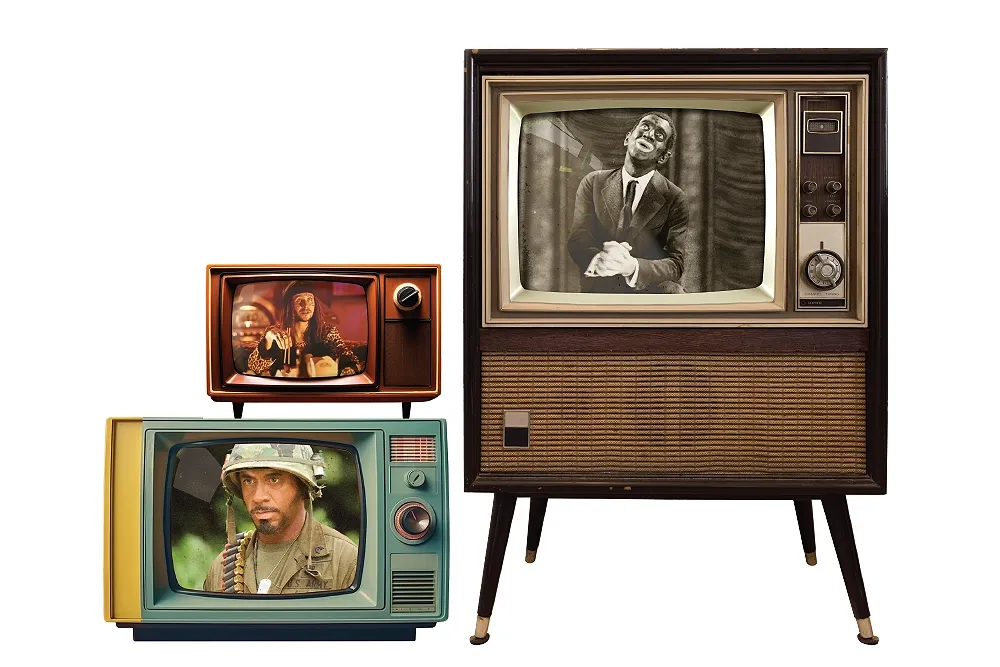
Drexl Spivey, played by Gary Oldman in True Romance (1993), is a white guy who thinks he is Black. He is a pimp with dreadlocks and scars running down his face. Today we might call this cultural appropriation, blaxploitation, or worse. But personally, I don’t have a problem with it. We have all known individuals that grew up in areas of a city which forced them to adapt or die. Maybe not literally but figuratively, or at least socially. I think that Quentin Tarantino, who wrote True Romance, drafted a character that he knew, or drew from real life. And that an authentic portrayal demanded a white guy who thinks he is a Black guy. Nothing more or less. And the great Gary Oldman kind of nailed it!
So it isn’t necessarily all bad out there. You could not get Tropic Thunder (2008) greenlit today with Robert Downey Jr.’s portrayal of Kirk Lazarus, a white Australian method actor and five-time Academy Award winner, who undergoes a controversial “pigmentation alteration” to temporarily darken his skin for the portrayal of Staff Sergeant Lincoln Osiris (a Black man). Today, it’s a white guy in blackface.
Which is where it may have all started, right? Think Al Jolson in The Jazz Singer (1927). The Jazz Singer made $2.6 million ($48 million in inflation-adjusted figures) on a $422,000 production budget ($7.9 million in adjusted budget). Or, six times its budget, no matter the era. Shifting gears from the silent era to the talking era aided in its bounty.
There is still more. Much more. Hitting a woman? Okay, back in the day. Gratuitous sex, violence and nudity? Fine. Have at it! In fact, enjoyed and celebrated. The use of the “N” word? Errr... “bye-bye.” That one is probably gone for good. And, good riddance!
Finally, I am here merely to get your thoughts started. I want to taste the flavors that are available nowadays in my flower. I also demand dimension from characters who don’t usually get it.
Until next time, I remain a scribe. I don’t attempt to ascribe.